Long, long time ago, well almost a decade to be exact, I found my first headfi headphone: the powerhouse Sennheiser HD-477. It's the beginning of a love affair that I didn't expect to last such a long time.
2014, with a new office came a need for a new budget HeadFi piece to stay in my desk drawer, ready to serve me anytime. But being in an open space office, a close full size headphone is ideal. My trusted favorite Ultrasone HFI450 is my first choice, but I don't have the heart to leave it back in my desk drawer. There it began my hunt for a new closed headphone, it must have sound so good that I want to use it, but cheap enough to leave it behind in my office drawer.
After months of search without result, I have tested several budget headphones and ended with a collection of sound signature in my head that I love but at the same time didn't get selected. Here are theorist of candidates:
1. Panasonic RP-HX550
2. Sennheiser HD 202
As my player, my trusted SanDisk Sansa CLIP+ 8GB.
As my reference: Audio Technical M-50
Since I have not selected.any one of those 2 headphones, I keep on searching.
My review, or rather my take, on the 2 candidates:
1. Panasonic RP-HX550

Just being.launched in 2014, Panasonic new headpiece the RP-HX550 is definitely my biggest surprise. Found by accident while trying to go to a Men's Room in a mall in Jakarta, the HX550 looks inviting with those brushed metal finished on closed plastic earpiece look stylish and definitely worth to test. At $80, I would consider it a bargain.
First Look Impression: nice finish with the plastic and metal material combo. The single wire connector with a flat tangle-free cable definitely add to its premium style.
First Sound Impression: Wow, V shaped equalizer
High - smooth and detailed, it didn't register as high fidelity high, but it is at participating with the like of Sennheiser HD 202 with a winning smoothness. For those looking for detailed smooth sounding high frequency in headphone, this is a keeper.
Mid - the singer voice is less focused and rather weird sounding. I would not recommend HX550 to voice headfi lovers.
Low - I am shocked by the sound, a good shock. It is clear and deeper with more details than expected from Panasonic headphone, especially consumer version. Don't get me wrong, HX550 is a warm headphone with a touch of treble details. Definitely a keeper for music lover, but not for voice centric lover. Lower in fun (bass) and details compared.to Audio Technical M-50, but details and soundstage to.match M-50.
2. Sennheiser HD 202

Bass monster on-ear Sennheiser HD 202 definitely will satisfy bass lovers and also superior in details.compared to Beats headpieces. Being closed unit, HD 202 has straight forward sound, especially compared to the older brother that I happened to own HD 477 (open headphone with better details and soundstage).

This headphone felt like I was wearing subwoofer for a.headphone. Bass details are replaced by bass explosion, a powerful one that is.
High - sweet
Mid - good
Low - powerful volume and impact but lacking.details
I would say inability to deliver details of music is what made me doubtful, especially compared to M-50.
Which will be my earpiece? I will let you know soon
2014, with a new office came a need for a new budget HeadFi piece to stay in my desk drawer, ready to serve me anytime. But being in an open space office, a close full size headphone is ideal. My trusted favorite Ultrasone HFI450 is my first choice, but I don't have the heart to leave it back in my desk drawer. There it began my hunt for a new closed headphone, it must have sound so good that I want to use it, but cheap enough to leave it behind in my office drawer.
After months of search without result, I have tested several budget headphones and ended with a collection of sound signature in my head that I love but at the same time didn't get selected. Here are theorist of candidates:
1. Panasonic RP-HX550
2. Sennheiser HD 202
As my player, my trusted SanDisk Sansa CLIP+ 8GB.
As my reference: Audio Technical M-50
Since I have not selected.any one of those 2 headphones, I keep on searching.
My review, or rather my take, on the 2 candidates:
1. Panasonic RP-HX550
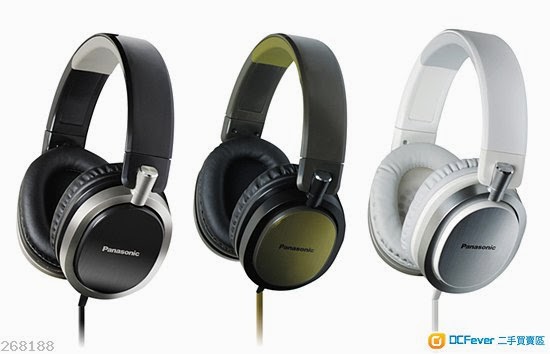
Just being.launched in 2014, Panasonic new headpiece the RP-HX550 is definitely my biggest surprise. Found by accident while trying to go to a Men's Room in a mall in Jakarta, the HX550 looks inviting with those brushed metal finished on closed plastic earpiece look stylish and definitely worth to test. At $80, I would consider it a bargain.
First Look Impression: nice finish with the plastic and metal material combo. The single wire connector with a flat tangle-free cable definitely add to its premium style.
First Sound Impression: Wow, V shaped equalizer
High - smooth and detailed, it didn't register as high fidelity high, but it is at participating with the like of Sennheiser HD 202 with a winning smoothness. For those looking for detailed smooth sounding high frequency in headphone, this is a keeper.
Mid - the singer voice is less focused and rather weird sounding. I would not recommend HX550 to voice headfi lovers.
Low - I am shocked by the sound, a good shock. It is clear and deeper with more details than expected from Panasonic headphone, especially consumer version. Don't get me wrong, HX550 is a warm headphone with a touch of treble details. Definitely a keeper for music lover, but not for voice centric lover. Lower in fun (bass) and details compared.to Audio Technical M-50, but details and soundstage to.match M-50.
2. Sennheiser HD 202

Bass monster on-ear Sennheiser HD 202 definitely will satisfy bass lovers and also superior in details.compared to Beats headpieces. Being closed unit, HD 202 has straight forward sound, especially compared to the older brother that I happened to own HD 477 (open headphone with better details and soundstage).

This headphone felt like I was wearing subwoofer for a.headphone. Bass details are replaced by bass explosion, a powerful one that is.
High - sweet
Mid - good
Low - powerful volume and impact but lacking.details
I would say inability to deliver details of music is what made me doubtful, especially compared to M-50.
Which will be my earpiece? I will let you know soon
