Showing posts with label headphone. Show all posts

Tuesday, November 25, 2014

Review: Sony NWZ-ZX1 Part 3

As promised, here us the continuing review on NWZ-ZX1 with the Bluetooth function with Sony MDR1RBT Mark II. I need to apologize since that's the only Bluetooth high end headphone that I have.

One signature that I found a bit disappointing is the hissing background noise that exist in all songs I played. Less hiss on 24bit recordings, more on lower quality stuffs, especially on MP3 at 192 kbs or lower. The hiss is not truly bothersome, just a low hiss. Some people might not even notice it. It just exists at the background. Some other reviewers mentioned that it is caused by the SMaster build-in amp. I don't know the real reason tho.

Anyhow, from all the same songs played from the previous part 2, one thing is also certain that this player turns MDR1RBT Mark II into a basshead headpiece with details and wide sound stage. The bass becomes so prominent across all songs that it tends to makes the songs more fun on dance genre and dark on rock genre, at the same time loss some of the sharpness.

The high frequency lost it's sharpness, the low lack depth and loss some impact, but vocal is still sweet and lushful. It does remind me of Monster Beats sound signature. Should Sony add a tad more impact, MDR1RBT Mark II will sound like the classic Audio Technica ATH-M50.

At least with all the lost frequencies, Sony's decisiona to use Bluetooth 3.0 is a smart decision indeed. One song that I always use to test Bluetooth headphones is Nightwish' Bye Bye Beautiful. Almost all Bluetooth headphones wavered when playing this song, losing their dynamic bass impact at the first beat of the drum; it's like the headphone lost power, which it is. Even MDR1RBT Mark II lost a tiny power to play it, however MDR1RBT Mark II keeps trying to maintain its power, thanks to the built-in amp in the headphone I believe. Smart move, Sony.

I do noticed that when playing dance beat songs, the music becomes more enjoyable and less analytical. Hence, details become less. The soundstage simulate club space, including the woofers. You definitely can feel the rumbling. Which means this piece is a killer wireless cans to watch movies.

Action movies come to live, transporting me to the cinema. I just hope Sony has the sense to produce Bluetooth feature into their Blu-ray players. However, due to the nature of HiRes Audio plauer NWZ-ZX1 is, playing movies on this unit is not a fun option. The audio player characteristic quality kicked in and never left, so movies audio become too flat to enjoy. I recommend Sony Xperia Z series or Samsung Galaxy 5" screen or above for superior movie watching enjoyment.
Note: Why I do not recommend other brands? Read my previous articles and you will find my bad experiences with other brands.

Rock music, however, suffers a bit. The bass is too loud, especially when the ClearAudio+ is on. It took me a while to finally programmed the equalizer to have suitable sound characteristics, but it is still lacking depth, compared to the wired sound.

One thing I noticed NWZ-ZX1 has offered is the option to prioritize quality over audio connection. This feature is helpful to eliminate network noises in frequency busy places. You can find the option in Settings, Bluetooth, Menu, Sound Enhancements dan Wireless Playback Quality.


Now, comparing NWZ-ZX1 and Astell&Kern AKs as Bluetooth music player, I must say AKs are superior, but with over 30% price difference, I would settle with NWZ-ZX1 because of other benefits that AKs don't provide.

So there, Sony NWZ-ZX1 in 3 parts (I want to write other match up, like UE700, etc, but I don't want to bore you guys. So let me know if you want me to continue on). This 30th anniversary Walkman is Sony's effort to bring back Walkman into the market. I consider this series successful. I see more amd more music listeners buy Walkman (ZX1, A15, F887, etc). It's a high quality DAP, although not for the big cans fanatics, but for daily commuters and students who want to listen for excellent music, this player and it's younger siblings are definitely the right choice, especially HiRes Audio DAP on the budget. Heck, even FIIO immediately retaliates with X1. High end DAP is definitely gone light-weight portable. More options are better for us, right?

Tuesday, October 21, 2014

Comparison: Ultrasone HFI450 vs Sony MDR1RBT Mark II vs Audio Technica ATH-M50 (classic black)

The 3 listed headphones are my favorite headphones. Ultrasone HFI450 has been my loyal companion for years. Now, Sony MDR1RBT Mark II has started taking over its place due to the fact that it has Bluetooth functionality. Then the one headphone that I have always wanted to have but has never been able to own it: Audio Technica M50. All 3 are the definitive all-rounder headphones so you can listen to any music genre you like with any of the 3.
Just a small note, my Holy Grail of headphones is Ultrasone Edition 8.


Any way, let's start the comparison shall we?

Physical Features:
1. Design: Sony MDR1RBT Mark II is the definitive winner

Regardless of anything, I haven't seen any headphone designed to impress. It's one d### sexy headpiece. Matte black finish with a gracefully placed metallic maroon lines, brushed platinum joints and soft luxurious leathers cushioning and padding. Need I say more?

2. Comfort

Okay, soft memory foam-like cushioning brings Sorry MDR1RBT Mark II as the winner. You can wear this baby for hours and never feel uncomfortable. The tightness of the cans has been measured extremely well while others are trying to clamp themselves to my head.
Audio Technica ATH-M50 came second since it's tighter and with firmer foam. Ultrasone HFI450 is also comfortable but it has the hardest foam of the 3. Although I can wear any of the 3 all day.

2. Sound Quality

- Treble/High Frequency
All 3 are have very clear and excellent treble, but Ultrasone HFI450 does sharper and brighter high. Listening to rock and alternative metal songs sounded like the drummer danced with the cymbals in front of my ears, I mean like I'm sitting on the drummer's chair and play the drums. Being an all-rounder headphone, Ultrasone HFI450 is a unit I would recommend to any beginner Headfiers since it is cheaper and you will understand why Hifi or high end headphones are sooo much fuuun.
Both Sony MDR1RBT Mark II and Audio Technica ATH-M50 has controlled treble. Both produce smoother treble in comparison, no harshness but clear and well defined.

- Mid Frequency
Sony MDR1RBT Mark II won this one. This cans certainly have a flatter frequency reproduction with a twist.
The other 2 are definitely tuned to have V-Shaped equalizer so the mid-range frequency are a bit suppressed.

- Bass/Low Frequency
Oh wow, all 3 has bass that I like and each has different characteristics. I will explain why.
First the Ultrasone HFI450. It is tuned as a bass dominant headphone. The bass has enough impact for fun listening but not for bass-head due to the equally lively treble. Ultrasone's S-Logic prevents bass impact to attact my ear drums so that means less fun, but safer/healthier. The detail of the bass is a bit eliminated by the can's limited frequencies reach (20Hz - 20kHz). That also means HFI450 can't really reproduce lower and deeper bass.
Audio Technica ATH-M50 is has bigger frequency range so and it's bass impact is such a legend. It can however reproduce the details of the instruments that place ATH-M50. You can hear the details of the bass and at the same with little loss of details. This is the cans you will love you use for fun and high-spirited listening.
Like Ultrasone HFI450, Sony MDR1RBT Mark II employs a similar technology. It doesn't shoot the music to your ears directly, instead it shoot the music to your ear walls. So the bass impact is more powerful, but not as powerful as ATH-M50 that shoots the music directly to your ear canals. Among the 3, MDR1RBT produces astonishing details and it does play deeper bass. For music listening, MDR1RBT wired is my weapon of choice when listening to complex music since it is capable of producing the most details.

Special Note on Sony MDR1RBT Mark II :
Being a Bluetooth and wired headphone, Sony has dual characteristics. Bluetooth has less details but certainly it's built-in amp drives a slightly powerful bass. While wired, MDR1RBT Mark II is more flat (not truly flat flat) and analytical so less impact on the bass but definitely deeper and detailed bass instruments.

Sound Separation:
Winner Sony MDR1RBT Mark II. It plays the most detailed separation of sound and very natural sounding. The minor upgrade that Sony gave to Mark II is making the headphone Bluetooth listening fun, while wired a tad more analytical quality like the original.
I must say both ATH-M50 and HFI450 is about even in this case.

Sound Staging :
No 1 is of course Sony MDR1RBT Mark II with the slightly crooked positioning of their driver to bounce frequency before reaching listeners ear drums. The music sounded naturally comes from a wider room, like in a studio. I can locate where each musician is located and how far they are from me. Please note the digital music player and the source format plays important role also. Interestingly enough, in Bluetooth mode, MDR1RBT Mark II is better at sound staging compared to the wired mode. It's build-in amp is brilliant.
No 2 is Ultrasone HFI450. The drivers are located below ears so sound travels around ear lobs before landing to ear drums. It is the safest headphone also since it has the least pressure to ear drums no matter how high the volume is. However, its sound staging is different. You feel you place yourself behind the musicians instead of in the musicians circle or in front of them. Think of it like you are sitting on the drummer's seat and listen.
No 3 is Audio Technica ATH-M50. Being a direct blasting headphone, it has the thinnest sound staging. It is a more fun headphone if you don't care about sound staging, but you need to be careful with the volume since it has the highest sound pressure among the 3.

Special Note on Sony MDR1RBT Mark II :
This might not count as music listening headphone, but Sony MDR1RBT Mark II is incredible when used to play movies. I feel like I'm in a theatre. I feel the rumbling of the woofer in action movies and definitely accurate surround sound. If you use the headphone for playing movies, this is my choice of can. It is as if MDR1RBT Mark II has dual personality, for movie watching and high-end music player.
The others don't have such characteristics.

Quiet Tone:
Sony MDR1RBT Mark II wins. It is more quiet then others is presenting zero sound. Usually it marks the higher end of headphones driver.

Final Judgement

All 3 has different characteristics and each has its own extra points. I personally now grab MDR1RBT Mark II more often since it delivers musics and movies the way I love. It does have drawbacks especially when listening to lower end recordings, despite of the masking Sony system does, I still can hear the imperfections. I prefer to use the Bluetooth functionality when listening through a smartphone, especially lower quality songs recording. But each headphone has its own merits and worth the purchase. I love all 3 cans but favor Sony and Ultrasone.

Wednesday, October 1, 2014

Sony MDR1RBT MARK II THE REVIEW

As promised, here comes the review of the famous SONY MDR1RBT MARK II.

Voted by Headfi critics as one of, if not, the best Bluetooth high-end headphone currently available in the market, Sony MDR1RBT Mark II does live up to it's hype. From physical quality to sound quality, this unit truly define a masterpiece. Do I recommend it to you guys? Let me review it first, you can be the judge.

Let's Get Physical

Physically, MDR1RBT Mark II is made of plastic, I think at least 85% are definitely plastic. Compared to other top end branded masterpiece headphones, MDR1RBT certainly looks at par by appearance, especially with their decision to use metallic red and black matte finishing.  But when you touch and hold it in your hands, you know it is plastic through and through. Don't get me wrong, it is high quality plastic, not some cheapo low grade plastic.

MDR1RBT design however outshines most top end headphones by its modern take on classic over-ear design. Hence, Sony designers tried hard to hide most of the buttons away from plain sight, so those who are not familiar with the Bluetooth varian will definitely think it's unwired (off) MDR1.

Unlike the original MDR1, MDR1RBT 3.5mm connection is hidden by rubber flap at bottom left ear cup,  so the flap needed to be opened when using this unit with its wire. I found it a bit disappointing since the original looks better with the cable hanging on left cup frame. Plus the opened rubber flap, although not very apparent, bugs me just because I know the flap is opened wide.  Being the Mark II, Sony should updated the 3.5mm connector to look like one found in MDR10RBT instead.

The cushion looks great and well placed. Enough said.

The metal brush and real metal on the rotating joints before the cups are brilliant MDR1 signature design also.

Does MDR1RBT can match the so-called cool headphones by Monster Beats? My answer is if you are a teenager with untrained ears, then Monster Beats headphones are your accessories to look cool and Monster Beats are the 'cool' ones.  However, if you are a mature and have trained ears, MDR1RBT (or other MDR1 series) does look far better. A more mature and executive like.

Why didn't I mention it as cool design for younger listeners? Well, I think Sony positioned MDR10 series for the younger listeners, smaller-lighter-cheaper.

The Wear

The trick with a 30-hour long battery life per charge is how long can you use it comfortably, of course. Despite the pressure of the cups on my head being a bit loose to my personal taste, MDR1RBT does feel comfortable for hours of usage. I used it for 3 hours straight without realizing that I'm using a full size headphone on my head.

Practical Side

Here is where Sony's brilliant design has flaws. All MDR1 series can only be folded flat,  meaning both cups twist 90° so it can be put on the table flat. It's a big unit, even the younger brother MDR10RBT still quite a big unit since it can only get flattened.

Arguments on the users of MDR1 series won't travel with this unit in their backpack is not a valid excuse not to improve on the practicality of having a headphone that can be folded to a smaller portable size.

On the other side of arguments, being a Bluetooth headset, you wan wear them all the time so that's why Sony made it so d### comfortable.

The Soul

Sound is always the main point for me in buying a headphone. I'm very fond of my Ultrasone HFI450 and Ultimate Ears UE700, so I'm in tune with V shaped equalizer, wide soundstage, extended details, deeper bass and good bass impact.

MDR1RBT being a Sony's product, it has a flatter equalizer than my other pieces. Vocal does become the favorite when listening via this unit. It's lushful and wonderfully natural. Emotional singers will project how they feel to the listeners. It's not what I consider vocal-focussed headset, but vocal is shining bright.

Bass, well, hmmmmmm. I must say MDR1RBT dynamic impact is superior to Ultrasone HFI450. It's tighter and more detailed.

High frequency, however, is very controlled. Don't get me wrong, every sound is reproduced clearly. This unit is tuned to control the treble not to be too sharp,  but clear and smooth. For me, it's like eating spicy food with the heat but not the pain.

Soundstage and sound separation are both brilliant. Using indirect sound wave path to ear calculation, Sony successfully created a beautiful level of soundstage within a closed environment. Added by the Sony's own technology to reproduce sound, MDR1 series in general have won so many critics hearts, including mine.

Bluetooth sound quality is by far the best to my ears. I did test MDR10 at Headfonia store (credit to Mr.  Yudie) a while back, the difference is pretty significant in details quality,  especially the bass. It's a totally different ball game there.
Furthermore, when using Bluetooth, the build-in amp will kick in and produce a more powerful sound compared to when used using wire. A lot of people said that Sony has apps on Android and iOS to support MDR1 series, but I haven't found it yet, Info anyone? Pretty please?

Final note on sound quality, the soul of the headphone, MDR1RBT is designed as all rounder headphone, so it doesn't link to a certain music category. However, I do find it superior when playing acoustic and vocal-based songs,

The Bomb

Well, just my luck. Currently, I'm using my second unit of MDR1RBT MKII. The first unit apparently has faulty battery that it failed to be recharged after I bought it. So I claimed it to Sony Service Center in my town (not without a little incidence of public explosion of anger). Sony decided to replace my unit with a new one. Bravo Sony on providing good, not yet excellent, customer satisfaction.

I just hoped that once they repair my unit, they don't sell it as new unit. They should use it as demo unit instead.

Closing

There you go, my take on SONY MDR1RBT MARK II.


Thursday, March 27, 2014

Budget HeadFi Fun: Hunting for under $100 Headfi

Long, long time ago, well almost a decade to be exact, I found my first headfi headphone: the powerhouse Sennheiser HD-477. It's the beginning of a love affair that I didn't expect to last such a long time.

2014, with a new office came a need for a new budget HeadFi piece to stay in my desk drawer, ready to serve me anytime. But being in an open space office, a close full size headphone is ideal. My trusted favorite Ultrasone HFI450 is my first choice, but I don't have the heart to leave it back in my desk drawer. There it began my hunt for a new closed headphone, it must have sound so good that I want to use it, but cheap enough to leave it behind in my office drawer.

After months of search without result, I have tested several budget headphones and ended with a collection of sound signature in my head that I love but at the same time didn't get selected. Here are theorist of candidates:
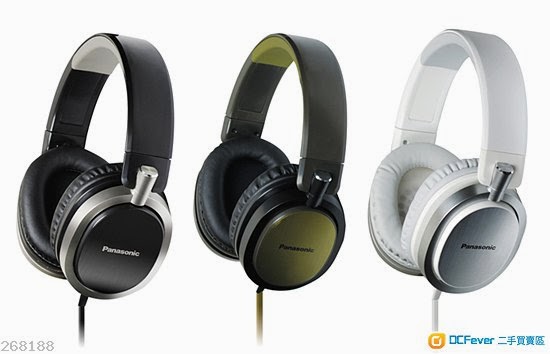
1. Panasonic RP-HX550
2. Sennheiser HD 202

As my player, my trusted SanDisk Sansa CLIP+ 8GB.

As my reference: Audio Technical M-50

Since I have not selected.any one of those 2 headphones, I keep on searching.

My review, or rather my take, on the 2 candidates:

1. Panasonic RP-HX550


Just being.launched in 2014, Panasonic new headpiece the RP-HX550 is definitely my biggest surprise. Found by accident while trying to go to a Men's Room in a mall in Jakarta, the HX550 looks inviting with those brushed metal finished on closed plastic earpiece look stylish and definitely worth to test. At $80, I would consider it a bargain.

First Look Impression: nice finish with the plastic and metal material combo. The single wire connector with a flat tangle-free cable definitely add to its premium style.

First Sound Impression: Wow, V shaped equalizer
High - smooth and detailed, it didn't register as high fidelity high, but it is at participating with the like of Sennheiser HD 202 with a winning smoothness. For those looking for detailed smooth sounding high frequency in headphone, this is a keeper.
Mid - the singer voice is less focused and rather weird sounding. I would not recommend HX550 to voice headfi lovers.
Low - I am shocked by the sound, a good shock. It is clear and deeper with more details than expected from Panasonic headphone, especially consumer version. Don't get me wrong, HX550 is a warm headphone with a touch of treble details. Definitely a keeper for music lover, but not for voice centric lover. Lower in fun (bass) and details compared.to Audio Technical M-50, but details and soundstage to.match M-50.

2. Sennheiser HD 202


Bass monster on-ear Sennheiser HD 202 definitely will satisfy bass lovers and also superior in details.compared to Beats headpieces. Being closed unit, HD 202 has straight forward sound, especially compared to the older brother that I happened to own HD 477 (open headphone with better details and soundstage).

This headphone felt like I was wearing subwoofer for a.headphone. Bass details are replaced by bass explosion, a powerful one that is.
High - sweet
Mid - good
Low - powerful volume and impact but lacking.details
I would say inability to deliver details of music is what made me doubtful, especially compared to M-50.

Which will be my earpiece? I will let you know soon

Sunday, May 26, 2013

Android Music Player Review: JetAudio vs PlayerPro

Listening to music is probably one of the most usable features of Android Smartphones. So useful that some manufactures boast about the capability of their smartphones musical capability.

I'm using Asus Padfone 2 and the original Samsung Galaxy Note N7000, despite of being the underdog compared to Samsung Galaxy S3 & S4, Sony Xperia Z, and HTC One, I'm quite surprise that musically it is a capable, if not excellent, audio player. It has flat neutral tone and clarity as a player.  So all I need is to find the most capable Audio/Music Player application for this PadFone2.

Side note: sound reproduction quality Asus Padfone 2 vs Samsung Galaxy Note: SGNote is warmer with more power on bass, but details rather sacrificed. Asus Padfone 2 is flatter with tighter bass and higher details. Quality wise, Asus Padfone 2 wins.

I have been testing several apps ever since I owned Asus Padfone 2: Google Music, WinAmp, PowerAmp, JetAudio, Neutron Player, PlayerPro and SoundMax.

My requirements for suitable music player are as follows:
- It needs to be able to play FLAC and Wave lossless format music
- Clarity for details and sound stage
- Flat tone preferences
- Able to support my collection of headphones and earphones
- All those must be fulfilled without any equalizer adjustment (EQ off)
Note: Equalizer needs to be off or set to flat/normal to make sure that the sound characteristic tuning is accordingly to the recorders/musicians attended sound or musical characteristics.

Out of all, I dropped out Google Music (no FLAC playing), WinAmp (sound quality not to my preference), and PowerAmp (too much sibilance and bad sound staging).  Later on, I dropped SonicMax, despite it is the only app and does BBE sound setting and very customizable, it doesn't have the EQ off setting, meaning everything is already set as sound tuning effect and it is the most bass-focussed player I tested.

The selection comes to JetAudio and PlayerPro.  Both have similar characteristics:
- Play FLAC and WAVE
- Read Folders
- Able to play music as it is (EQ off)
- Good sound tone characteristics: excellent brightness (excellent details, excellent sound separations, acceptable sound staging)
- Both can support my headphones and earphones (Super lux HD381F, UE700, Sennheiser MX760, Ultrasone HFI 450 and Jays V-Jays)
- Both have simulated amp setting, to adjust the volume out to support bigger headphones (preamp setting), pretty good for my Ultasone HFI 450 since it requires higher amp out.

The differences are as follows:

(Pre-note: songs used for testing are GnR's Welcome to the Jungle, Hans Zimmer's Molossus, Hans Zimmer and Lisa Gerard's Now We are Free, Yasuharu Takanashi's Fairy Tail Theme, Slipknot's Psychosocial,  Susan Wong's First of May, Nightwish's Wish I Had an Angel, and Maroon 5's Move Like Jagger.)

JetAudio:
- Mid frequency is adequate, almost every vocals sound as they are supposed to sound, except when the singer has the tendency of having higher pitch sound characteristic (it rolled off)
- Bass impact is excellent, tight but powerful, all music become warmer
- High frequency details is adequate and controllable, no sibilance.
- Sound staging is leaning towards a smaller space; imagine you are listening the music in your bedroom or living room, you can allocate the source and they are at close range.
- Sound separation detail is sacrificed due to the enhancement of bass tonality. Nightwish's Wish I Had an Angel lost its cymbals percussions and parts of bass guitar. Hans Zimmer's Molossus percussions are inseparable.
- PreAmp enables the songs to have higher power up to a small level
- However, when played using speakers, JetAudio sounds excellent and well balanced and relax, if not laid back. Very enjoyable.
- Gapless play is poor quality. Not recommended, better turn it off.
- Recommended for pop, hip hop, dance, techno and other genres that requires more bass tonality.

PlayerPro:
- Mid frequency is good and clear
- Bass is tight and less boomy, but keeps adequate impact.
- High frequency is very good, producing details and controlled treble. Sibilance only heard when using higher PreAmp level.
- Sound staging is acceptable. I can recognize where were the musicians of each instrument were located.
- Sound separation is surprisingly better, the separation of each instrument is clearer in symphonic metal and classical musics.
- PreAmp enables the song to have higher power up to a small level
- Recommended for acoustic, classical, jazz, rock and metal songs.

With this summary, I recommend PlayerPro. Get the paid version since it comes with 2x equalizer adjustment frequency to tweak for those who prefer customized music reproduction.