Thursday, November 13, 2014

Review: Sony NWZ-ZX1 Part 1

Introduction - Why I Choose Sony NWZ-ZX1

Among all high end, or rather high resolution, Digital Audio Players, Sony has not been in consideration for years due to their stubborn policy of not playing several popular formats of high resolution audio recordings such as: FLAC, ALAC, AIFF, and more. This decision positioned Sony as the producer of retail mid end DAP that relies solely on MP3 based format. Even with research on developing MP3 format to a higher sounding format, not many fanatics of high resolution audio listeners were interested to use Sony's Walkman as their main DAP.

Until 2014, 35 years after Sony hatched the first product line of portable audio called Walkman, Sony decided to open the door and accepted their products to play nearly all formats of high end audio recording, the result: the 35th Anniversary Walkman called NWZ-ZX1.


I first got my interest on ZX1 after the Sony's announcement of the next portable high resolution audio player Walkman series A (NWZ-A15 and A17). Those 2 new units are sexy, well built and most likely to storm the market and win a lot casual listeners. I was about to shop for iBasso DX50 or AK100, which for those keen on high resolution audio immediately recognized as 2 of most preferred DAP in the market. And after reading tons of references in the Internet I found so many stories about how great both products are that I tested them both. They are exemplary excellent DAP in their own rights.

One notable feature that AK100 and ZX1 both have is Bluetooth; AK100 employs Bluetooth 3.0 (AK100 II uses Bluetooth 4.0) and ZX1 uses Bluetooth 3.0. So both are able to stream higher resolution sounds.

The Review

Design

All are designed to last and abuse, although DX50 is sturdier in comparison, ZX1 has its own perk of being the lightest and tiniest volume-wise among the three.

However, when walking around listening to music, I found ZX1 is more comfortable in my hand especially for prolonged listening for its lighter weight and smartphone sized body. Even with the lower back protruding in an awkward way, it tends to assist my hand in avoiding slippage combined with the leather-like material to cover the aluminium frame.

The touch screen is well-sized, and the physical buttons are well placed and again well-thought-out to present easy access by soft touch recognition, with little dots and different sizes. I love using the physical buttons since they are easy to recognize even without looking at the unit. However, the hardened leather-like case lacking access to the buttons really sucks.


User Interface

I'll keep it short, it's an older Android OS. Easy to use and access. Not the richest in features but adequate for listeners. Later on I'll review the apps available for this unit.


The Sound Impression

I put a lot consideration on how to represent the sound impression I get. I prefer to approach it differently this time around since talking about high end DAP won't be fair if not paired with the headphone used. That means the combination will come to account, since I have (although cheaper variances) several unique sound headphones, I will try to provide combination impression. So here we go, I hope you enjoy my approach.


Sony NWZ-ZX1 with Sennheiser MX760


Both are known for the wide sound staging. So what happened if I paired them together?

First of all, Senn MX760 is definitely a treble rich earbud with deep bass and big sound stage. So I tested it without EQ, but the treble becomes a bit too much. Then I turned on the ClearSound+ feature which nullified all eq settings to Sony pre-programmed sound signature, both literally become a new favorite matching for serious detail-minded listening.

I played Louis Armstrong's What a Wonderful Day and if I close my eyes, I swear I can imagine Louis standing in front with violin players close to his left and drums and guitar further on his rear right side, bass player right side closer than the drums. The music and voice so clear that I have high appreciation on the 24 bit and 96 kHz recording. Even Louis signature lips play can be heard.

Then I played Linkin Park's In Pieces (from Minutes to Midnight album with 16/44 recording) and for a small earbud to represent ZX1 sound, it is unbelievably enjoyable experience. Big impact and deep bass, voice and instruments separation are clear and well-placed, smooth treble. The sound are loaded with details.

Those 2 songs I think has represented how well they both match up.

Note: Warning high impact bass means do not start the music with high volume, especially over 80%. It will be painful. I used 60% max volume which are plenty already.

On the downer side, some treble heavy songs and lower recording quality (128kbps MP3 or lower) becomes too sharp and too noisy to listen due to MX760 sensitivity of details, despite of Sony's DSEE HX feature turned on to smoothen the roughness.


Bonus Impression:
SanDisk Sansa Clip+ with Sennheiser MX760

Sansa Clip+ is a cheap but a high quality player, however it doesn't have the range ZX1 has. Two major differences that separates the two:

- Clip+ bass is tight and detailed but lacking the depth and clarity.
- Clip+ has a smaller sound staging, the right analogy would be comparing a 1x1x1 cubical meter (Clip+) to a Studio size room (ZX1)

Don't get me wrong, I love my Clip+ as a casual daily driver. I have been using it for a couple of years. It's tiny size and light weight just slip to my shirt pocket inconspicuously without becoming a burden. While ZX1 requires a belt wallet or case to be used without bothering my movement.

Each has their own purpose.

So there, my first part of Sony NWZ-ZX1 impression. Next I will pair it with Sony MDR1RBT Mark II, wired and Bluetooth connected. Each has it's own sound signature that a little different one to another, especially with some hidden Sony NWZ-ZX1 features turned on.

Tuesday, October 21, 2014

Comparison: Ultrasone HFI450 vs Sony MDR1RBT Mark II vs Audio Technica ATH-M50 (classic black)

The 3 listed headphones are my favorite headphones. Ultrasone HFI450 has been my loyal companion for years. Now, Sony MDR1RBT Mark II has started taking over its place due to the fact that it has Bluetooth functionality. Then the one headphone that I have always wanted to have but has never been able to own it: Audio Technica M50. All 3 are the definitive all-rounder headphones so you can listen to any music genre you like with any of the 3.
Just a small note, my Holy Grail of headphones is Ultrasone Edition 8.


Any way, let's start the comparison shall we?

Physical Features:
1. Design: Sony MDR1RBT Mark II is the definitive winner

Regardless of anything, I haven't seen any headphone designed to impress. It's one d### sexy headpiece. Matte black finish with a gracefully placed metallic maroon lines, brushed platinum joints and soft luxurious leathers cushioning and padding. Need I say more?

2. Comfort

Okay, soft memory foam-like cushioning brings Sorry MDR1RBT Mark II as the winner. You can wear this baby for hours and never feel uncomfortable. The tightness of the cans has been measured extremely well while others are trying to clamp themselves to my head.
Audio Technica ATH-M50 came second since it's tighter and with firmer foam. Ultrasone HFI450 is also comfortable but it has the hardest foam of the 3. Although I can wear any of the 3 all day.

2. Sound Quality

- Treble/High Frequency
All 3 are have very clear and excellent treble, but Ultrasone HFI450 does sharper and brighter high. Listening to rock and alternative metal songs sounded like the drummer danced with the cymbals in front of my ears, I mean like I'm sitting on the drummer's chair and play the drums. Being an all-rounder headphone, Ultrasone HFI450 is a unit I would recommend to any beginner Headfiers since it is cheaper and you will understand why Hifi or high end headphones are sooo much fuuun.
Both Sony MDR1RBT Mark II and Audio Technica ATH-M50 has controlled treble. Both produce smoother treble in comparison, no harshness but clear and well defined.

- Mid Frequency
Sony MDR1RBT Mark II won this one. This cans certainly have a flatter frequency reproduction with a twist.
The other 2 are definitely tuned to have V-Shaped equalizer so the mid-range frequency are a bit suppressed.

- Bass/Low Frequency
Oh wow, all 3 has bass that I like and each has different characteristics. I will explain why.
First the Ultrasone HFI450. It is tuned as a bass dominant headphone. The bass has enough impact for fun listening but not for bass-head due to the equally lively treble. Ultrasone's S-Logic prevents bass impact to attact my ear drums so that means less fun, but safer/healthier. The detail of the bass is a bit eliminated by the can's limited frequencies reach (20Hz - 20kHz). That also means HFI450 can't really reproduce lower and deeper bass.
Audio Technica ATH-M50 is has bigger frequency range so and it's bass impact is such a legend. It can however reproduce the details of the instruments that place ATH-M50. You can hear the details of the bass and at the same with little loss of details. This is the cans you will love you use for fun and high-spirited listening.
Like Ultrasone HFI450, Sony MDR1RBT Mark II employs a similar technology. It doesn't shoot the music to your ears directly, instead it shoot the music to your ear walls. So the bass impact is more powerful, but not as powerful as ATH-M50 that shoots the music directly to your ear canals. Among the 3, MDR1RBT produces astonishing details and it does play deeper bass. For music listening, MDR1RBT wired is my weapon of choice when listening to complex music since it is capable of producing the most details.

Special Note on Sony MDR1RBT Mark II :
Being a Bluetooth and wired headphone, Sony has dual characteristics. Bluetooth has less details but certainly it's built-in amp drives a slightly powerful bass. While wired, MDR1RBT Mark II is more flat (not truly flat flat) and analytical so less impact on the bass but definitely deeper and detailed bass instruments.

Sound Separation:
Winner Sony MDR1RBT Mark II. It plays the most detailed separation of sound and very natural sounding. The minor upgrade that Sony gave to Mark II is making the headphone Bluetooth listening fun, while wired a tad more analytical quality like the original.
I must say both ATH-M50 and HFI450 is about even in this case.

Sound Staging :
No 1 is of course Sony MDR1RBT Mark II with the slightly crooked positioning of their driver to bounce frequency before reaching listeners ear drums. The music sounded naturally comes from a wider room, like in a studio. I can locate where each musician is located and how far they are from me. Please note the digital music player and the source format plays important role also. Interestingly enough, in Bluetooth mode, MDR1RBT Mark II is better at sound staging compared to the wired mode. It's build-in amp is brilliant.
No 2 is Ultrasone HFI450. The drivers are located below ears so sound travels around ear lobs before landing to ear drums. It is the safest headphone also since it has the least pressure to ear drums no matter how high the volume is. However, its sound staging is different. You feel you place yourself behind the musicians instead of in the musicians circle or in front of them. Think of it like you are sitting on the drummer's seat and listen.
No 3 is Audio Technica ATH-M50. Being a direct blasting headphone, it has the thinnest sound staging. It is a more fun headphone if you don't care about sound staging, but you need to be careful with the volume since it has the highest sound pressure among the 3.

Special Note on Sony MDR1RBT Mark II :
This might not count as music listening headphone, but Sony MDR1RBT Mark II is incredible when used to play movies. I feel like I'm in a theatre. I feel the rumbling of the woofer in action movies and definitely accurate surround sound. If you use the headphone for playing movies, this is my choice of can. It is as if MDR1RBT Mark II has dual personality, for movie watching and high-end music player.
The others don't have such characteristics.

Quiet Tone:
Sony MDR1RBT Mark II wins. It is more quiet then others is presenting zero sound. Usually it marks the higher end of headphones driver.

Final Judgement

All 3 has different characteristics and each has its own extra points. I personally now grab MDR1RBT Mark II more often since it delivers musics and movies the way I love. It does have drawbacks especially when listening to lower end recordings, despite of the masking Sony system does, I still can hear the imperfections. I prefer to use the Bluetooth functionality when listening through a smartphone, especially lower quality songs recording. But each headphone has its own merits and worth the purchase. I love all 3 cans but favor Sony and Ultrasone.

Wednesday, October 1, 2014

Sony MDR1RBT MARK II THE REVIEW

As promised, here comes the review of the famous SONY MDR1RBT MARK II.

Voted by Headfi critics as one of, if not, the best Bluetooth high-end headphone currently available in the market, Sony MDR1RBT Mark II does live up to it's hype. From physical quality to sound quality, this unit truly define a masterpiece. Do I recommend it to you guys? Let me review it first, you can be the judge.

Let's Get Physical

Physically, MDR1RBT Mark II is made of plastic, I think at least 85% are definitely plastic. Compared to other top end branded masterpiece headphones, MDR1RBT certainly looks at par by appearance, especially with their decision to use metallic red and black matte finishing.  But when you touch and hold it in your hands, you know it is plastic through and through. Don't get me wrong, it is high quality plastic, not some cheapo low grade plastic.

MDR1RBT design however outshines most top end headphones by its modern take on classic over-ear design. Hence, Sony designers tried hard to hide most of the buttons away from plain sight, so those who are not familiar with the Bluetooth varian will definitely think it's unwired (off) MDR1.

Unlike the original MDR1, MDR1RBT 3.5mm connection is hidden by rubber flap at bottom left ear cup,  so the flap needed to be opened when using this unit with its wire. I found it a bit disappointing since the original looks better with the cable hanging on left cup frame. Plus the opened rubber flap, although not very apparent, bugs me just because I know the flap is opened wide.  Being the Mark II, Sony should updated the 3.5mm connector to look like one found in MDR10RBT instead.

The cushion looks great and well placed. Enough said.

The metal brush and real metal on the rotating joints before the cups are brilliant MDR1 signature design also.

Does MDR1RBT can match the so-called cool headphones by Monster Beats? My answer is if you are a teenager with untrained ears, then Monster Beats headphones are your accessories to look cool and Monster Beats are the 'cool' ones.  However, if you are a mature and have trained ears, MDR1RBT (or other MDR1 series) does look far better. A more mature and executive like.

Why didn't I mention it as cool design for younger listeners? Well, I think Sony positioned MDR10 series for the younger listeners, smaller-lighter-cheaper.

The Wear

The trick with a 30-hour long battery life per charge is how long can you use it comfortably, of course. Despite the pressure of the cups on my head being a bit loose to my personal taste, MDR1RBT does feel comfortable for hours of usage. I used it for 3 hours straight without realizing that I'm using a full size headphone on my head.

Practical Side

Here is where Sony's brilliant design has flaws. All MDR1 series can only be folded flat,  meaning both cups twist 90° so it can be put on the table flat. It's a big unit, even the younger brother MDR10RBT still quite a big unit since it can only get flattened.

Arguments on the users of MDR1 series won't travel with this unit in their backpack is not a valid excuse not to improve on the practicality of having a headphone that can be folded to a smaller portable size.

On the other side of arguments, being a Bluetooth headset, you wan wear them all the time so that's why Sony made it so d### comfortable.

The Soul

Sound is always the main point for me in buying a headphone. I'm very fond of my Ultrasone HFI450 and Ultimate Ears UE700, so I'm in tune with V shaped equalizer, wide soundstage, extended details, deeper bass and good bass impact.

MDR1RBT being a Sony's product, it has a flatter equalizer than my other pieces. Vocal does become the favorite when listening via this unit. It's lushful and wonderfully natural. Emotional singers will project how they feel to the listeners. It's not what I consider vocal-focussed headset, but vocal is shining bright.

Bass, well, hmmmmmm. I must say MDR1RBT dynamic impact is superior to Ultrasone HFI450. It's tighter and more detailed.

High frequency, however, is very controlled. Don't get me wrong, every sound is reproduced clearly. This unit is tuned to control the treble not to be too sharp,  but clear and smooth. For me, it's like eating spicy food with the heat but not the pain.

Soundstage and sound separation are both brilliant. Using indirect sound wave path to ear calculation, Sony successfully created a beautiful level of soundstage within a closed environment. Added by the Sony's own technology to reproduce sound, MDR1 series in general have won so many critics hearts, including mine.

Bluetooth sound quality is by far the best to my ears. I did test MDR10 at Headfonia store (credit to Mr.  Yudie) a while back, the difference is pretty significant in details quality,  especially the bass. It's a totally different ball game there.
Furthermore, when using Bluetooth, the build-in amp will kick in and produce a more powerful sound compared to when used using wire. A lot of people said that Sony has apps on Android and iOS to support MDR1 series, but I haven't found it yet, Info anyone? Pretty please?

Final note on sound quality, the soul of the headphone, MDR1RBT is designed as all rounder headphone, so it doesn't link to a certain music category. However, I do find it superior when playing acoustic and vocal-based songs,

The Bomb

Well, just my luck. Currently, I'm using my second unit of MDR1RBT MKII. The first unit apparently has faulty battery that it failed to be recharged after I bought it. So I claimed it to Sony Service Center in my town (not without a little incidence of public explosion of anger). Sony decided to replace my unit with a new one. Bravo Sony on providing good, not yet excellent, customer satisfaction.

I just hoped that once they repair my unit, they don't sell it as new unit. They should use it as demo unit instead.

Closing

There you go, my take on SONY MDR1RBT MARK II.


Sunday, September 7, 2014

The Hunt for Headphone Ended

Ypu know, of all the strange things that happened to me, I have to end up with the strangest, if I must say so. I found a my drea,  headphone unplanned and without thinking. Of all the list of headphones that I checked, Sony MDR10RBT is the hardest to find. Somehow Sony Indonesia doesn't seem seriously release it. That includes Sony MDR1RBT Mark II.

So, now what to do?

Just today, out of the blue, I found 1 new unit of Sony MDR1RBT Mark II. According to the store staff, Sony has only dropped 2 units,  1 for sell and the other a demo unit. So, out of instinct and frustration on other things in life, I decided to entertain myself and buy Sony MDR1RBT Mark II. The 30-hour Bluetooth and wired headphone that received highest rave of positive reviews from every reviewers in the Internet.

There you go, all the months of planning and testing, O ended up the highest end of headphones that I have ever buy.

Coming soon,  the personal review.

Sunday, May 11, 2014

The Hunt for Headphone continues

You know what, after considering all options, I'm going with Bluetooth headphone. My targets :
- Jabra Revo Wireless
- Creative WP350
- Sony MDR10RBT

I'll post my reviews later.

Thursday, March 27, 2014

Budget HeadFi Fun: Hunting for under $100 Headfi

Long, long time ago, well almost a decade to be exact, I found my first headfi headphone: the powerhouse Sennheiser HD-477. It's the beginning of a love affair that I didn't expect to last such a long time.

2014, with a new office came a need for a new budget HeadFi piece to stay in my desk drawer, ready to serve me anytime. But being in an open space office, a close full size headphone is ideal. My trusted favorite Ultrasone HFI450 is my first choice, but I don't have the heart to leave it back in my desk drawer. There it began my hunt for a new closed headphone, it must have sound so good that I want to use it, but cheap enough to leave it behind in my office drawer.

After months of search without result, I have tested several budget headphones and ended with a collection of sound signature in my head that I love but at the same time didn't get selected. Here are theorist of candidates:
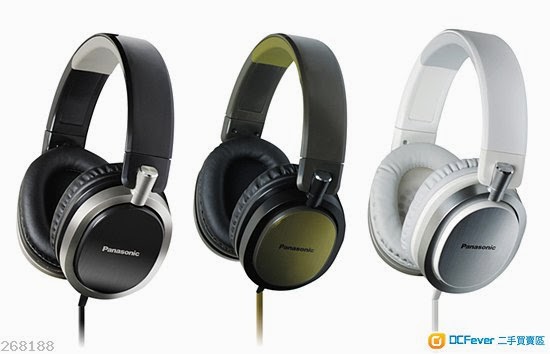
1. Panasonic RP-HX550
2. Sennheiser HD 202

As my player, my trusted SanDisk Sansa CLIP+ 8GB.

As my reference: Audio Technical M-50

Since I have not selected.any one of those 2 headphones, I keep on searching.

My review, or rather my take, on the 2 candidates:

1. Panasonic RP-HX550


Just being.launched in 2014, Panasonic new headpiece the RP-HX550 is definitely my biggest surprise. Found by accident while trying to go to a Men's Room in a mall in Jakarta, the HX550 looks inviting with those brushed metal finished on closed plastic earpiece look stylish and definitely worth to test. At $80, I would consider it a bargain.

First Look Impression: nice finish with the plastic and metal material combo. The single wire connector with a flat tangle-free cable definitely add to its premium style.

First Sound Impression: Wow, V shaped equalizer
High - smooth and detailed, it didn't register as high fidelity high, but it is at participating with the like of Sennheiser HD 202 with a winning smoothness. For those looking for detailed smooth sounding high frequency in headphone, this is a keeper.
Mid - the singer voice is less focused and rather weird sounding. I would not recommend HX550 to voice headfi lovers.
Low - I am shocked by the sound, a good shock. It is clear and deeper with more details than expected from Panasonic headphone, especially consumer version. Don't get me wrong, HX550 is a warm headphone with a touch of treble details. Definitely a keeper for music lover, but not for voice centric lover. Lower in fun (bass) and details compared.to Audio Technical M-50, but details and soundstage to.match M-50.

2. Sennheiser HD 202


Bass monster on-ear Sennheiser HD 202 definitely will satisfy bass lovers and also superior in details.compared to Beats headpieces. Being closed unit, HD 202 has straight forward sound, especially compared to the older brother that I happened to own HD 477 (open headphone with better details and soundstage).

This headphone felt like I was wearing subwoofer for a.headphone. Bass details are replaced by bass explosion, a powerful one that is.
High - sweet
Mid - good
Low - powerful volume and impact but lacking.details
I would say inability to deliver details of music is what made me doubtful, especially compared to M-50.

Which will be my earpiece? I will let you know soon

Wednesday, March 26, 2014

Sony Xperia Z Ultra Hands On Review

Alright, for those who followed.this blog, you know that I'm a suckered for Samsung Galaxy Note N7000, aka the original Galaxy Note. In recent years, that is the smartphone that I used for over 18 months until it became too obsolete that everything become unbearably slow to operate.

2013 is probably the slowest year for me in regards of Android smartphones, except for 2 smartphones: Asus Padfone 2 and Sony Xperia Z series.

I must say, those 2 enticed me with their creative solutions that I decided to buy Asus. Unfortunately, that was a decision that I regretted due to hardware flaws and weaknesses.

2014, I went backward and purchase the abdominal Sony Xperia Z Ultra, this 1920x1080-true-HD-6.44"-screen-2.2ghz-quad-core is the current record breaker of thinnest and biggest screen for a phone category.

As an old fan.of SGNote, stylus writing capabilities and features to support it are something that I yearned when using Asus Padrone 2 or my just retired Polytron Quadra HD. Sony creatively put an incredible amount features to their Z series, including their giant Z Ultra. Those features made my SGNote becomes a museum piece.

Sony Xperia Z Ultra exceptional and useful features (that I know of, and I believe I will find more soon enough):

- Reading/Accessing portable hard disk
Z Ultra ability to access portable hard disk makes my life easier. I don't rely on transferring files using flash memory and computer anymore on the go.  However, accessing big capacity (1TB or above) portable HDD is proven to be hardwork for the unit since the limited electricity power Z Ultra has. Connection easily severed and lost power several time. Looks like there is a limit how long Z Ultra can.supply power to the HDD unit.

- Stylus replacement: pencil, pen, or anything made of iron
Did I hear a "Huh?" Well, it is unique. Sony decided that the users of Z Ultra are people who like pens and pencils so forget the stylus and go straight to use pen and pencil as stylus instead.  Brilliant decision with some risks like screen scratches etc. Solution, screen protector.
I also found out that Samsung C-Pen (not the same as SGNote's faithfull S-Pen), which uses metalized rubber, work like they were born for each other on Z Ultra.
With this feature, users can freely use almost anything to write, annotate or sketch on Z Ultra. Why bother buying a stylus then? Well, users will still need stylus since pens and pencils will scratch Z Ultra screen surface in the long run.

- NFC Easy Connection
Whoa, Sony pretty much exploded NFC trends by applying easy connection features that now tons of NFC accessories are now available in the market. Samsung and HTC have NFC features.but they don't really put NFC as part of their main strategic feature.

- Dust and Water Proof
Sony might not be the first, but they certainly the one to  explode water and dust proof smartphones worldwide. I would.say shame on Motorola for not exploring Defy series further. Now, Samsung has noticed the.Zip series success and launch Galaxy S5 with water and dust proof feature.

- Power Management
HTC One was the first high end smartphone that featured this newer unique feature, however HTC limits this features to only One series. Sony produces almost every middle and top range of their products with Sony's stylized Power Management. Of course, HTC in turn quickly add more products with this feature and Lenovo follow suits to flood the market with affordable Android smartphones with Power Management features pre-installed.

- Being a tall unit with almost 2 cm/1 inch space on top and bottom of the screen means Z Ultra is the current best suited Android for gaming and multimedia consumption

What else can I say, last year I.made a mistake on deciding to buy Asus. This year Z Ultra has gone down in price and become my new favorite smartphone.

Of course there are some drawbacks:
- Painfully gigantic size for a.phone
- Flaps here and flaps there mean extra efforts required to access USB and the rest of the connections
- Glass (front and back) means scratches and fingerprint magnet, self explanatory here, Sony people might talk to Apple people a bit too much
- New screen means trip and error, luckily Z Ultra uses the 2nd generation 1920x1080 HD Triluminous Bravia technology so it is superior to the previous ones on Z, but not necessarily better than IPS and Super Amoled

Final words on my first 1 week living with Z Ultra, I fell in love and Z Ultra is definitely my concubine. Please don't tell my wife.